


An Introduction to the Fitness-Fatigue Model
- James Farr
- Feb 28, 2024
- 5 min read

Updated: Apr 30, 2024
Understanding the Balance in Training
In the realm of physical fitness and sports performance, the quest for optimal training strategies is unending. Athletes, coaches, and fitness enthusiasts are constantly seeking ways to enhance performance, increase strength, and improve overall health. One concept that stands out in this pursuit is the Fitness-Fatigue Model. This model, a cornerstone in exercise physiology and sports science, offers a nuanced understanding of how training affects the body and how to balance exertion and recovery for peak performance.
The Genesis of the Model
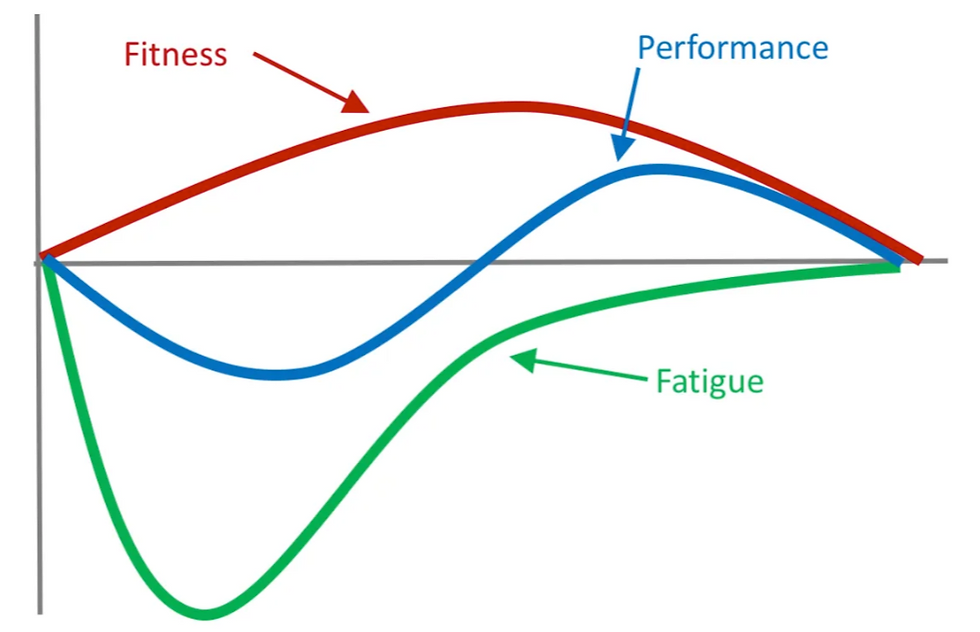
The Fitness-Fatigue Model isn't a new concept; it has been a part of athletic training discussion for decades. It was developed to explain the relationship between an athlete's fitness, fatigue, and performance following training sessions. The model proposes that every training session generates two competing effects: an increase in fitness and an accumulation of fatigue. Understanding and managing these two effects is crucial for optimising training and achieving the best possible performance outcomes.
Fitness vs. Fatigue: A Delicate Dance
At the heart of the model is the interplay between fitness and fatigue. Fitness, in this context, refers to the positive adaptations that occur as a result of training—increased strength, endurance, speed, skill, improved body composition. On the other hand, fatigue represents the temporary decrease in performance capacity due to factors like muscle soreness, energy depletion, and psychological stress.
The key insight of the Fitness-Fatigue Model is that while both fitness and fatigue are products of training, they have different lifespans. Fitness benefits accumulate and last longer, while fatigue is more transient. Immediately after a workout, fatigue masks the fitness gains, leading to a temporary dip in performance. However, as fatigue dissipates faster than fitness, individual’ physical performance capability eventually surpasses their pre-training level.
The Implications for Training
This model has profound implications for how athletes and fitness enthusiasts approach training. It underscores the importance of rest and recovery, the need for periodisation in training programs, and the necessity of individualised training plans. By understanding and applying the principles of the Fitness-Fatigue Model, individuals can optimise their training, avoid overtraining, and achieve peak physical performance when it matters most.
In the following sections, we will delve deeper into the intricacies of the Fitness-Fatigue Model, exploring how it can be applied in practical training scenarios and how even non-athletes can use its principles to enhance their fitness journey.
Exploring the Fitness-Fatigue Model in Detail
The Mechanics of the Model
To fully grasp the Fitness-Fatigue Model, it's essential to understand its two primary components: the fitness response and the fatigue response.
1. Fitness Response: This is the positive adaptation your body undergoes following exercise. It includes increased muscular strength, improved cardiovascular efficiency, enhanced skill level, and better neuromuscular coordination. These adaptations don't happen overnight but accumulate over time with consistent training.
2. Fatigue Response: Post-exercise fatigue is an inevitable consequence of intense physical activity. It manifests as muscle soreness, reduced muscle power, depleted energy stores, and even mental fatigue. Unlike fitness gains, fatigue sets in quickly but also dissipates relatively fast, provided adequate rest and recovery are allowed.
The Interplay Between Fitness and Fatigue
The crux of the Fitness-Fatigue Model lies in how these two responses interact over time. After a training session, fatigue initially overshadows fitness gains, leading to a temporary decline in performance. However, as fatigue diminishes and fitness levels remain elevated, there's a net increase in performance capability. This is the ideal state athletes aim for, especially before competitions.
Periodisation and Recovery: Key Strategies
Understanding the dynamics of fitness and fatigue leads to two critical training strategies:
1. Periodisation: This involves structuring training into distinct phases with varying intensity, volume, and type of exercise. The goal is to systematically build fitness while allowing for recovery and reduction of fatigue. Periodisation can be broken down into macrocycles (annual plans), mesocycles (monthly/quarterly phases), and microcycles (weekly plans).
2. Recovery: Adequate recovery is just as important as the training itself. This includes not only rest days but also active recovery, proper nutrition, hydration, sleep, and stress management. Recovery strategies ensure that fatigue dissipates effectively, allowing the fitness gains to shine through.
Practical Application in Training
For athletes, this model suggests that training should be carefully planned to maximize fitness gains while minimizing and managing fatigue. It's not just about training hard but training smart. For instance, tapering before a major event allows an athlete to reduce fatigue while maintaining fitness, leading to peak performance on the day of the competition.
For the general fitness enthusiast, the model serves as a reminder that more is not always better. It emphasises the importance of rest days, varying workout routines, and listening to one's body to prevent overtraining and injuries.
Conclusion and Practical Advice for the General Population
Harnessing the Model for Everyday Fitness
While the Fitness-Fatigue Model is a staple in elite sports, its principles are universally applicable, even for the general population engaging in regular fitness routines. Here’s how everyday gym-goers, fitness enthusiasts, and even beginners can apply this model to enhance their training effectiveness and overall well-being.
Tailoring the Model to Individual Needs
1. Understand Your Body: Recognise that fitness and fatigue responses are highly individual. Factors like age, training history, lifestyle, and even genetics play a role. Start by understanding your current fitness level and how your body responds to different types of training.
2. Balance Intensity and Volume: Not every workout needs to be high-intensity or high-volume. Mix up your routine with a combination of intense training days and lighter, recovery-focused activities. This approach helps in accumulating fitness while managing fatigue.
3. Prioritise Recovery: Recovery is not just the absence of training; it's an active process. Ensure adequate sleep, proper nutrition, hydration, and consider techniques like stretching, yoga, or even mindfulness practices to aid recovery.
4. Listen to Your Body: Pay attention to signs of excessive fatigue, such as prolonged muscle soreness, decreased performance, sleep disturbances, or lack of motivation. These could be indicators that your body needs more rest or a change in your training routine.
5. Set Realistic Goals: Set achievable fitness goals that align with your lifestyle, time constraints, and physical capabilities. Remember, fitness is a journey, not a destination.
Concluding Thoughts
The Fitness-Fatigue Model offers a valuable framework for understanding how to balance training and recovery for optimal performance and health. By applying the principles of this model, individuals can create a more sustainable and effective fitness routine, leading to long-term health benefits and improved quality of life.
Remember, the goal of training should not only be about reaching peak performance but also about maintaining a healthy, balanced lifestyle. Whether you're an athlete preparing for competition or someone striving for personal health and fitness goals, the Fitness-Fatigue Model can be a guiding light in your journey towards achieving and sustaining peak physical condition.


Comments